AskAva — Designing a 0-to-1 Concierge App for Villa Guests
My role
UX/UI designer
My responsibilities
- Benchmark
- Persona
- User flow
- Wireframe
- UI Design
- Design system
Tools used
- Sketch
Project info
- iOS Mobile
- iOS Tablet
- Desktop
Visit the application
Overview
The project
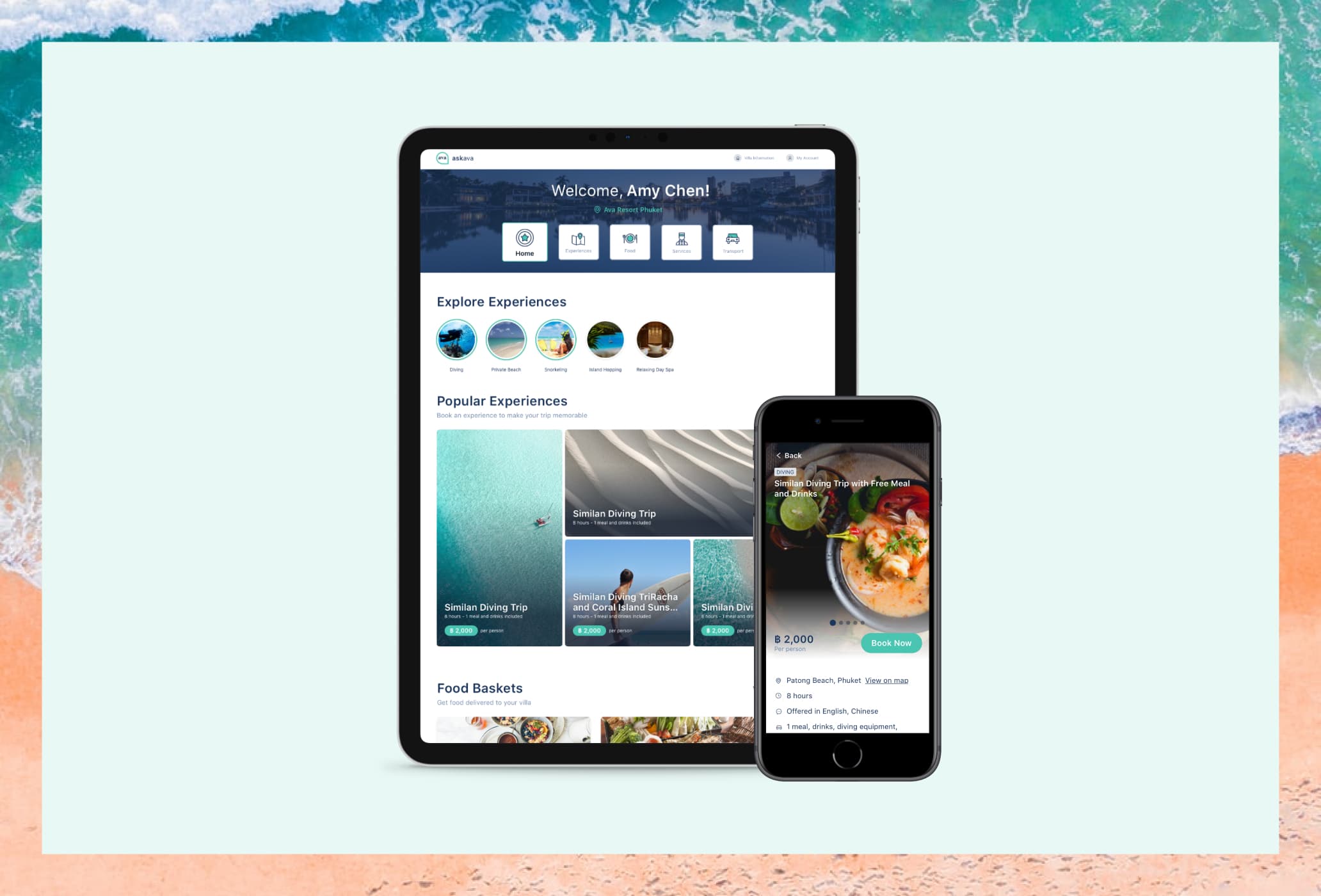
AskAva is a personal concierge app built for villa guests in Thailand. Through the app, guests can book local experiences, order authentic food, and arrange transportation all in one place, without needing to speak Thai or figure things out alone.
This was a 0-to-1 project. There was no existing product, no prior research, and a brief that was still taking shape. Our job was to help the client turn a raw idea into a working MVP fast enough to test the market and solid enough to attract investment.
The Challenge
The client had a clear target audience in mind, upper middle class to high-end travelers from China, Europe, and Russia staying in private villas in southern Thailand. But beyond that, the scope was open. We had to define what the product actually was, who it was really for, and what it needed to do all while designing across three platforms simultaneously.
The constraints were limited appetite for research, a tight timeline, and a lot of unknowns. We had to move fast and make smart decisions without the usual foundation of user interviews or data.
Understanding the Users
The primary scenario we designed for was a tablet placed in the villa room, the guest's main touchpoint with the app during their stay. This naturally shaped who we expected to be using it.
- Villa stays aren't cheap, so the user base skews upper middle class and above.
- Since the app lives on a device in the room rather than something handed to them, we anticipated users who are already comfortable with technology. Very young or less tech-savvy guests were unlikely to be the primary audience.
- Mobile was designed as a companion experience, giving guests access to the same features when they're out exploring beyond the villa.
Since user interviews weren't on the table, we built our personas from a combination of client knowledge, their business and market research, assumptions about the target market, and a focused benchmarking exercise.
While not backed by direct research, having clearly defined personas kept the project grounded. It helped us scope the product more confidently, make faster design decisions, and push back when conversations drifted away from what the actual users would need.
We landed on 3 distinct users:
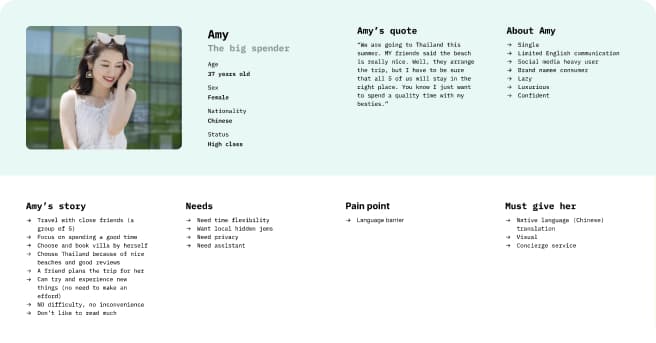
Amy — The Big Spender
30 years old, Chinese, high class. Amy is traveling to Thailand with. One friend organized the trip, but Amy made sure they're staying somewhere great. She's a social media native, brand-conscious, and doesn't like reading long pages of text. Her biggest barrier is language. Limited English means she can easily feel lost or excluded. She needs everything to feel effortless, visual, and available in Chinese.
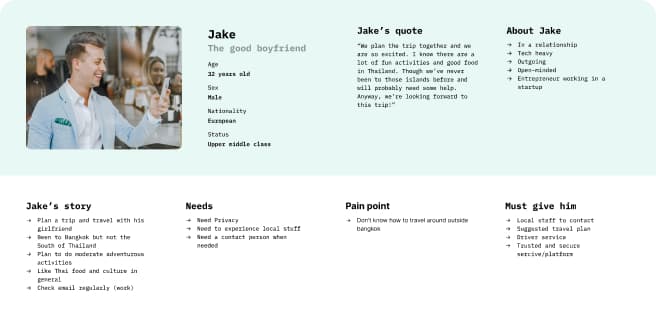
Jake — The Good Boyfriend
32 years old, European, upper middle class. Jake planned this trip to impress his girlfriend. He's been to Bangkok before but never the south. He's tech-savvy and outgoing, but outside of Bangkok he loses confidence. He doesn't know how to get around, who to trust, or what to do. He needs someone to guide him without making him feel like a tourist.
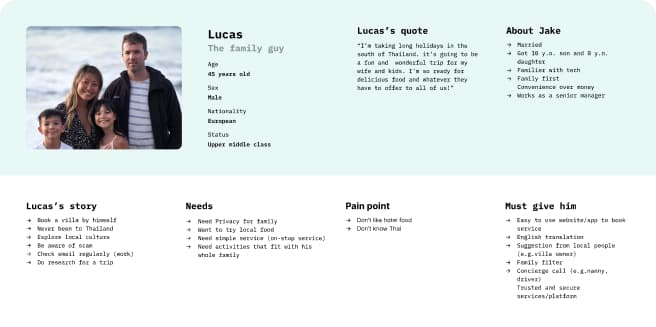
Lucas — The Family Man
45 years old, European, upper middle class. Lucas booked a villa for his family, wife and young children. He's a senior manager, practical, and puts family first. He's done his research and he knows scams exist. He needs to trust the platform completely. He wants one place to handle everything, food, activities, transport, without bouncing between apps or making phone calls.
What all 3 share: they're in an unfamiliar place, they don't speak Thai, and they need to feel safe and taken care of. That became the product's core promise, a service that feels personal, reliable, and effortless in a place where you don't know anyone.
Research and Benchmark
Without user interviews, our benchmark became the most important research tool we had. We looked closely at Klook, Agoda, Airbnb, Booking.com, and Expedia to understand what already works for travelers.
We studied how experience cards are structured and what details actually drive someone to click. We looked at how categories are organized, how navigation flows across different types of content, and where these platforms create friction. The goal was to meet users where their expectations already are then build on top with the local and concierge experience these platforms don't offer.
Defining the App Structure
We built a sitemap to give the client a concrete picture of the product. This helped align everyone on scope and made it easier to prioritize what was in and out of the MVP.
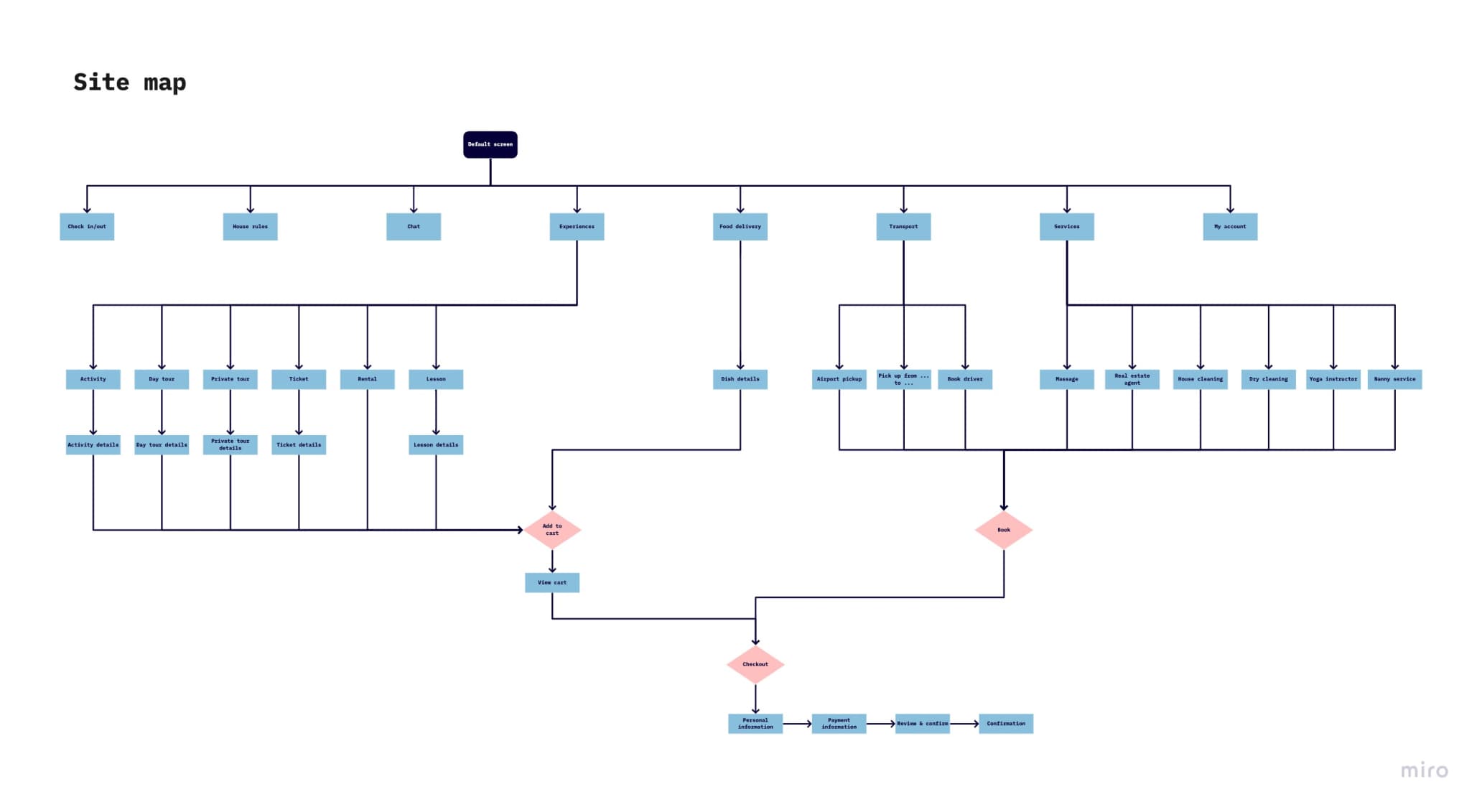
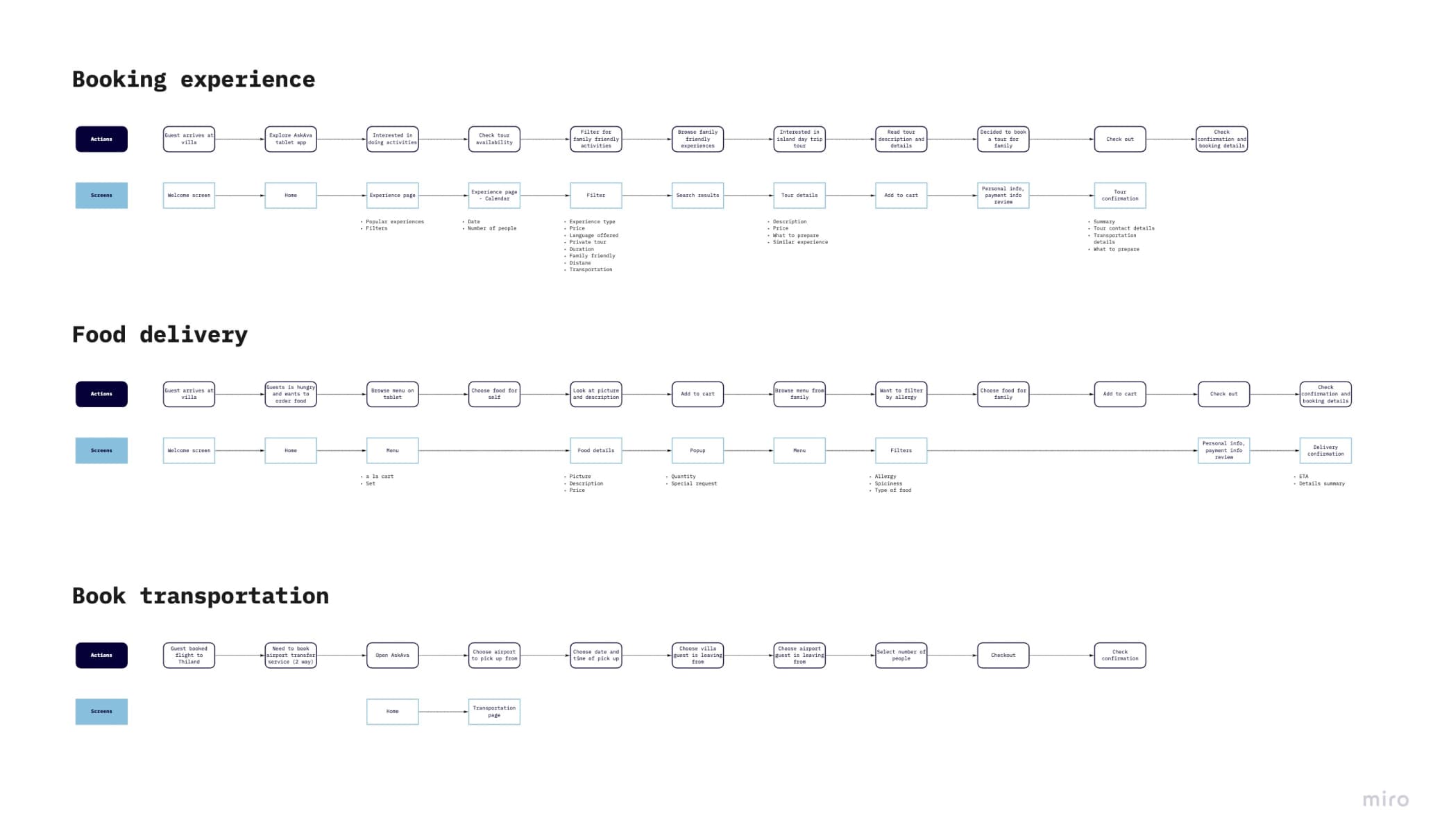
From the sitemap, we mapped 3 core flows in detail:
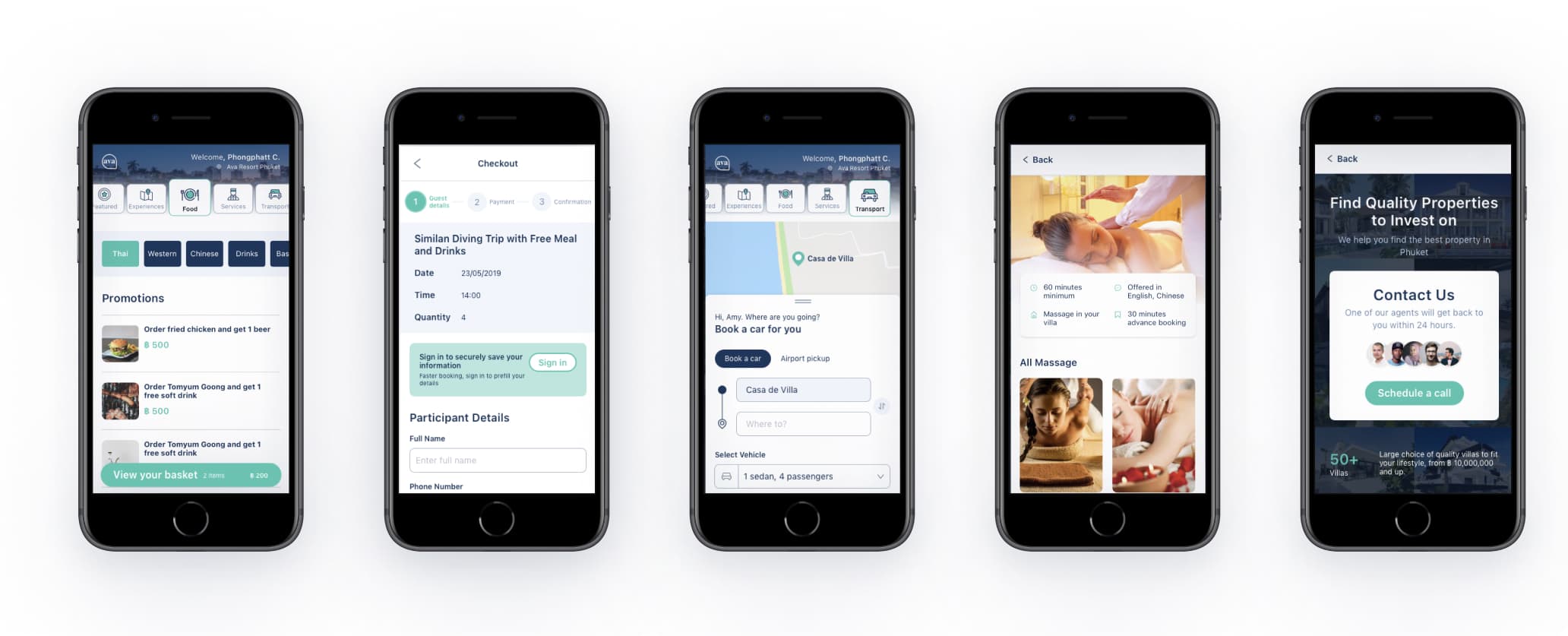
- Booking an experience
- Ordering food
- Booking transportation
Walking through each flow helped both stakeholders and developers understand exactly how the app would feel to use, where decisions happen, and what information is needed at each step.
Design Decisions
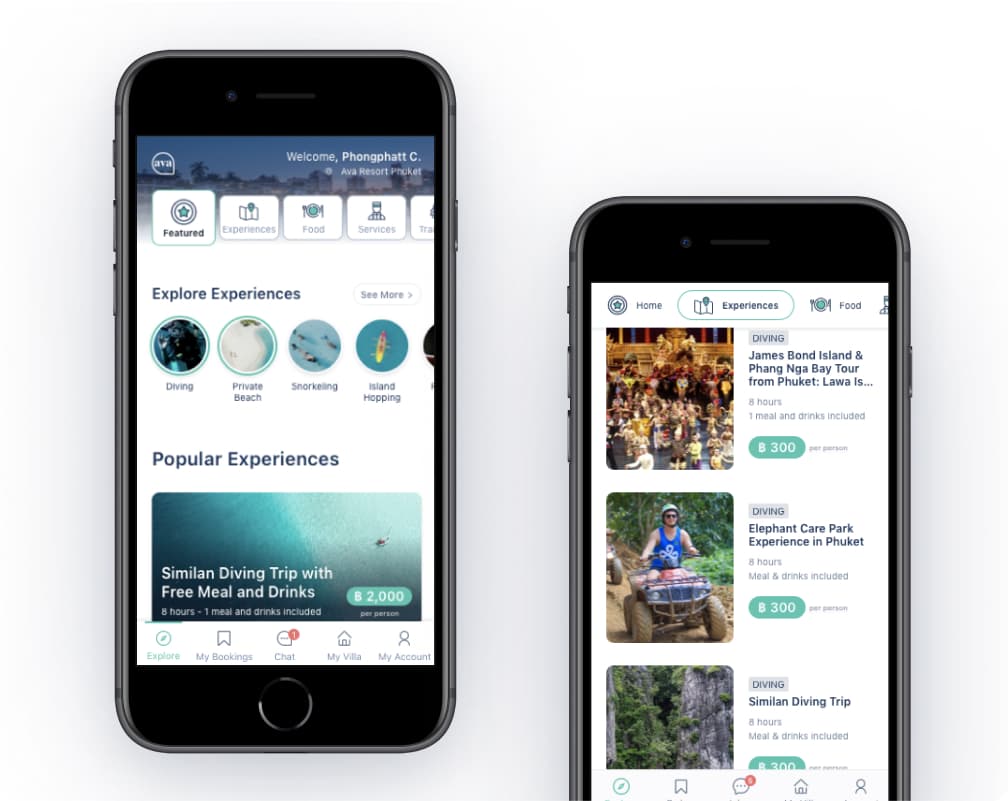
Home — everything one tap away
We designed the home screen so users can see all features at a glance without digging. A tab-based layout makes navigation simple and immediate. It also scales cleanly across mobile, tablet, and desktop, which mattered since we were designing for three platforms at once.
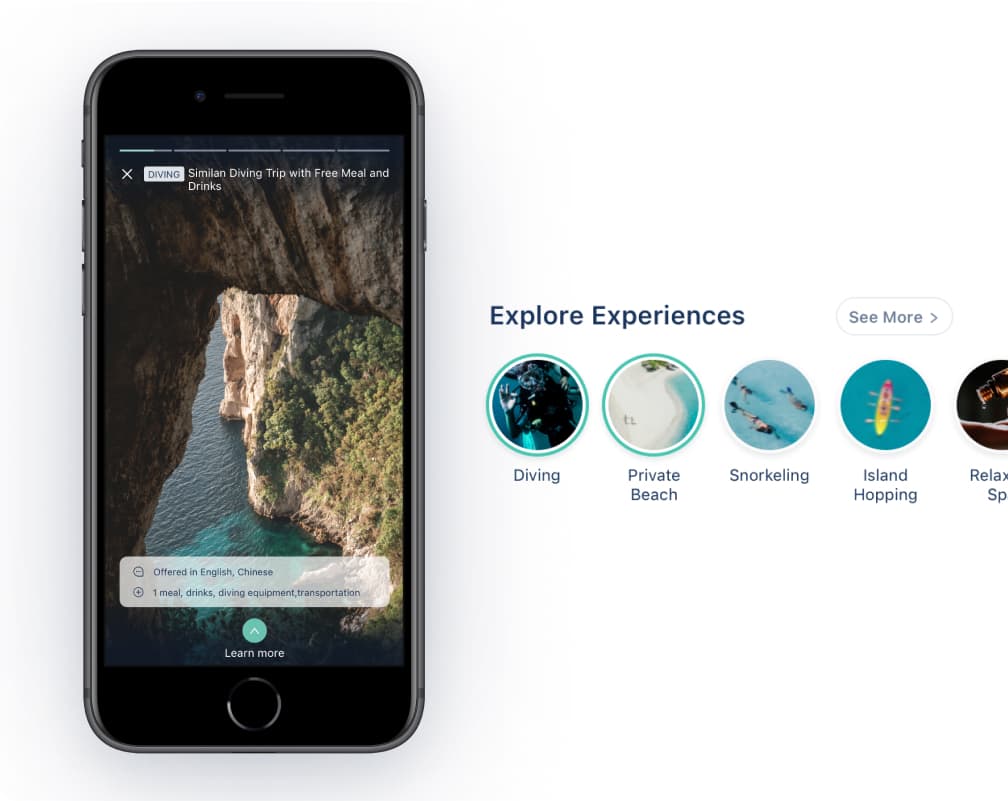
Stories — browsing that feels familiar
To help users discover experiences, we designed a full-screen video browsing format similar to how people already share content on social media. For users who live on Instagram and Tiktok, this format feels natural, not like opening a booking app. Content is pulled from the product gallery, so it doesn't create extra work for the admin team.
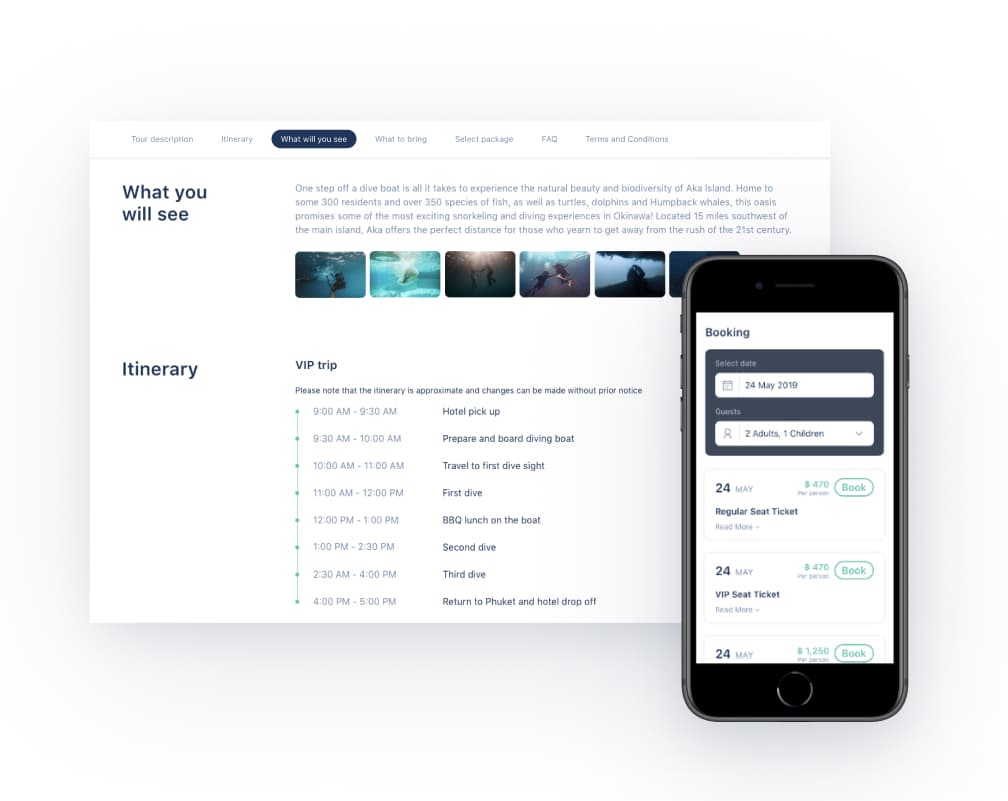
Experience detail — find what you need fast
Experience pages carry a lot of information. We added a sticky anchor bar at the top so users can see the page structure at a glance and jump directly to what they care about — itinerary, pricing, what's included — without scrolling through everything.
Styleguide & design system
We developed the visual branding alongside the UI, making sure the look and feel matched what the product needed to communicate.
The color palette centers on 2 core colors. Dark blue is the primary. It signals credibility, trust, and reliability, which mattered a lot for a platform asking users to book services and spend money in an unfamiliar place. Teal green is the accent. It brings in the relaxed, tropical, natural energy of southern Thailand. Together they balance trust with atmosphere.
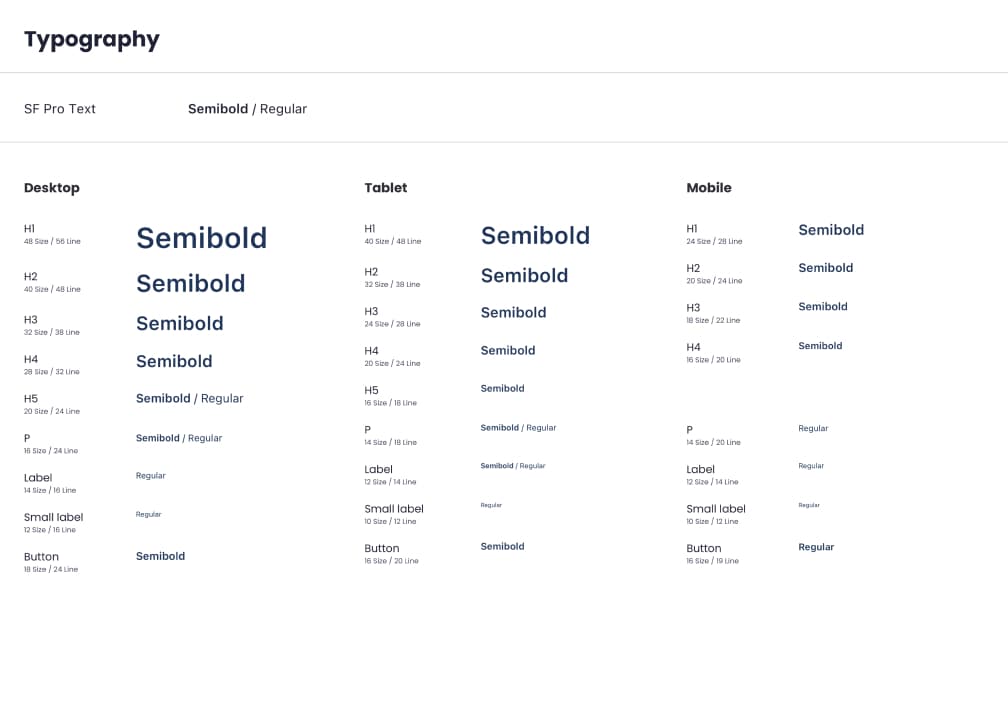
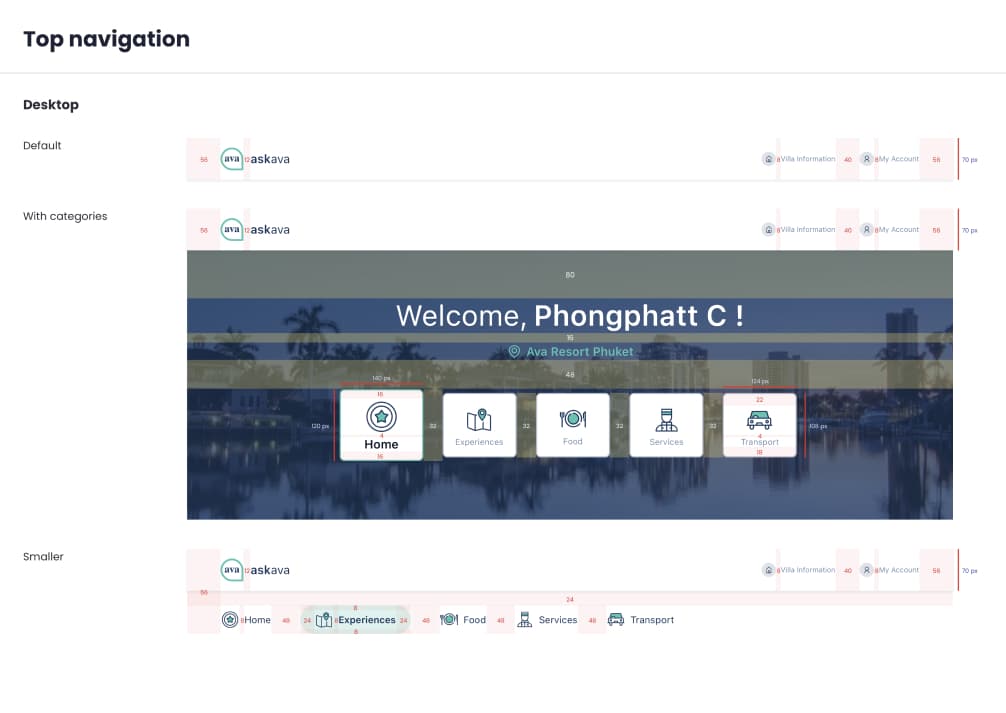
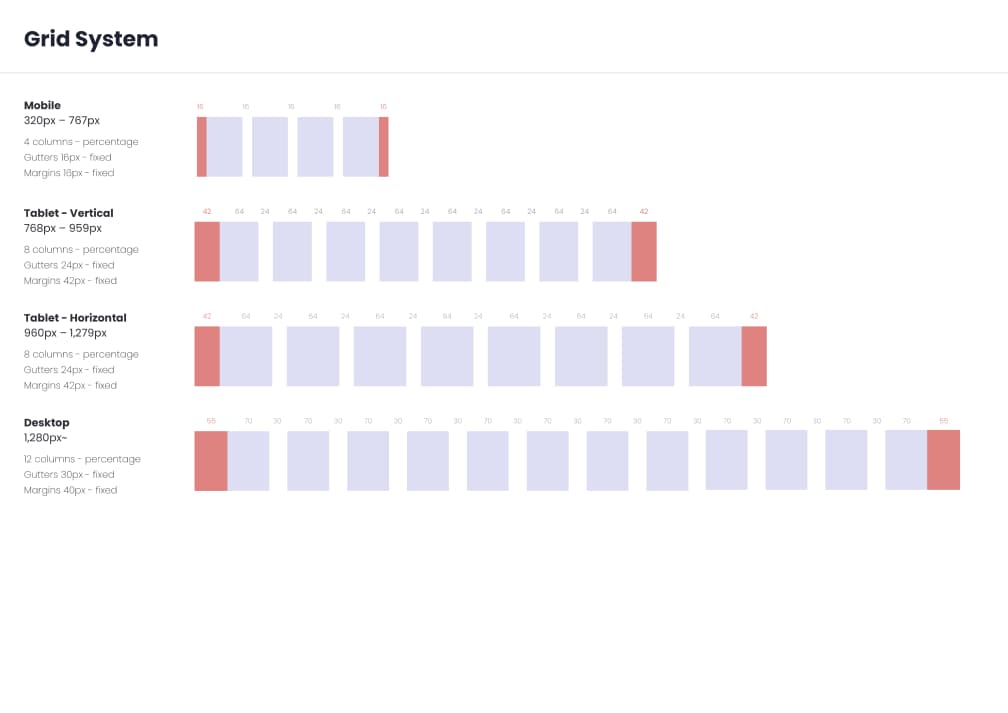
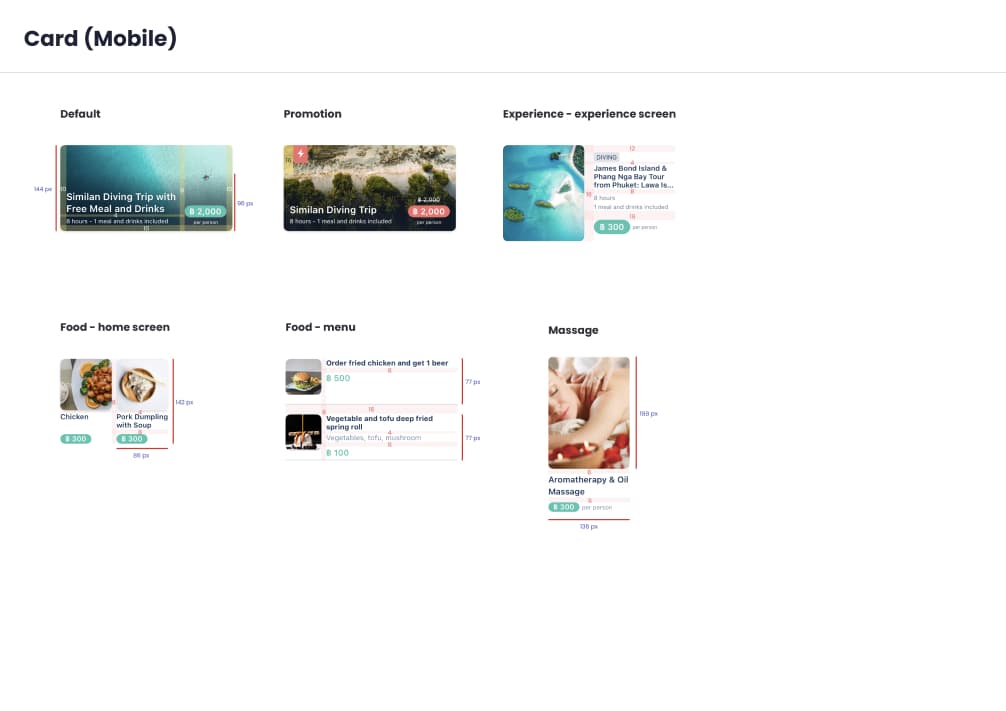
Beyond color, we documented the full design system — typography, components, spacing, and patterns — so the product stays consistent across all three platforms and gives developers a clear reference to build from.
After Launch
Outcome
The app launched. The client praised the team for delivering a polished, well-structured product quickly, despite a vague brief and a short timeline. Despite the success , the business eventually closed due to COVID-19.
What I'd Do Differently
This project was early in my career, and looking back there's a lot I'd approach differently now.
I'd start by questioning the business side more seriously. Is there a real and sustainable need here? I'd want to talk directly to villa guests and, just as importantly, to villa owners. Even a simple survey would have made the personas much more grounded and harder to argue with. I'd also push for at least some lightweight user testing before the build, and I'd get developers in the room earlier so feasibility questions get answered before they become problems.
The personas we built were honest assumptions. They pointed us in the right direction, but they were never validated. That's the thing I'd want to fix most.